Real estate transaction checklist for agents (free checklist + software guide)

Buyers and sellers race against the clock more often than not — a seasonal rush, a rate shift that gets buyers off the sidelines, or a pipeline of deals all landing at once. When that happens, agents on both sides of the deal need a repeatable process, not an improvised one.
That pressure isn't easing up. NAR's chief economist projected in June 2026 that existing-home sales will rise 4% this year, with momentum building through the second half of the year as more buyers and sellers re-enter the market. More volume and tighter coordination across lenders, inspectors, and attorneys leave little room for missed deadlines or dropped details.
The best-performing agents typically aren't working longer hours — they're following a structured process, often backed by transaction management software, that keeps every deadline, document, and client on track.
Why you need a real estate transaction checklist
Why you need a real estate transaction checklist
- System over hustle: Tight timelines and rising volume make a structured workflow essential, not optional, for buyer's and seller's agents alike.
- The blueprint: A 5-stage workflow: Consultation → Market Prep/Offers → Under Contract → Closing → Post-Closing.
- The danger zone: "Under contract" is where deals are won or lost. Track every contingency deadline proactively.
- The tech that helps: MLS integration, eSignature, and automated milestone tracking keep every deal — listing or purchase — on schedule, whichever platform you use.
The complete summer transaction checklist for real estate agents
Every transaction follows the same general path, but buyers and sellers have different priorities before a contract is signed. Once an offer is accepted, both sides move through the same timeline — inspections, financing, title work, contingencies, and closing.
A structured transaction checklist for real estate agents helps stay ahead of contingency deadlines, reduce compliance risk, standardize communication, keep documents organized, and deliver a consistent client experience on every deal.
This checklist follows the natural lifecycle of a transaction. Each phase separates buyer's agent and seller's agent responsibilities so that you can track a single timeline from consultation to closing.

Phase 1: Client consultation and preparation
This is where the paperwork habits you build will either save you time or cost you time you don't have. Every agreement, contact record, and disclosure you set up now becomes the foundation the rest of the deal runs on. Lone Wolf Transact helps here by giving every buyer and seller a single, connected contact record from day one — so signed agreements route straight into the right transaction folder via Lone Wolf Authentisign, and nothing has to be re-created or re-found later in the process.
Buyer's agent checklist
- Conduct a detailed buyer needs assessment (must-haves vs. nice-to-haves, timeline, budget ceiling).
- Confirm buyer is pre-approved, not just pre-qualified, with a responsive lender who can move quickly.
- Set expectations: a fast-moving market means competition, fast timelines, and likely escalation scenarios.
- Agree on communication norms (channel, frequency, how quickly you need decisions).
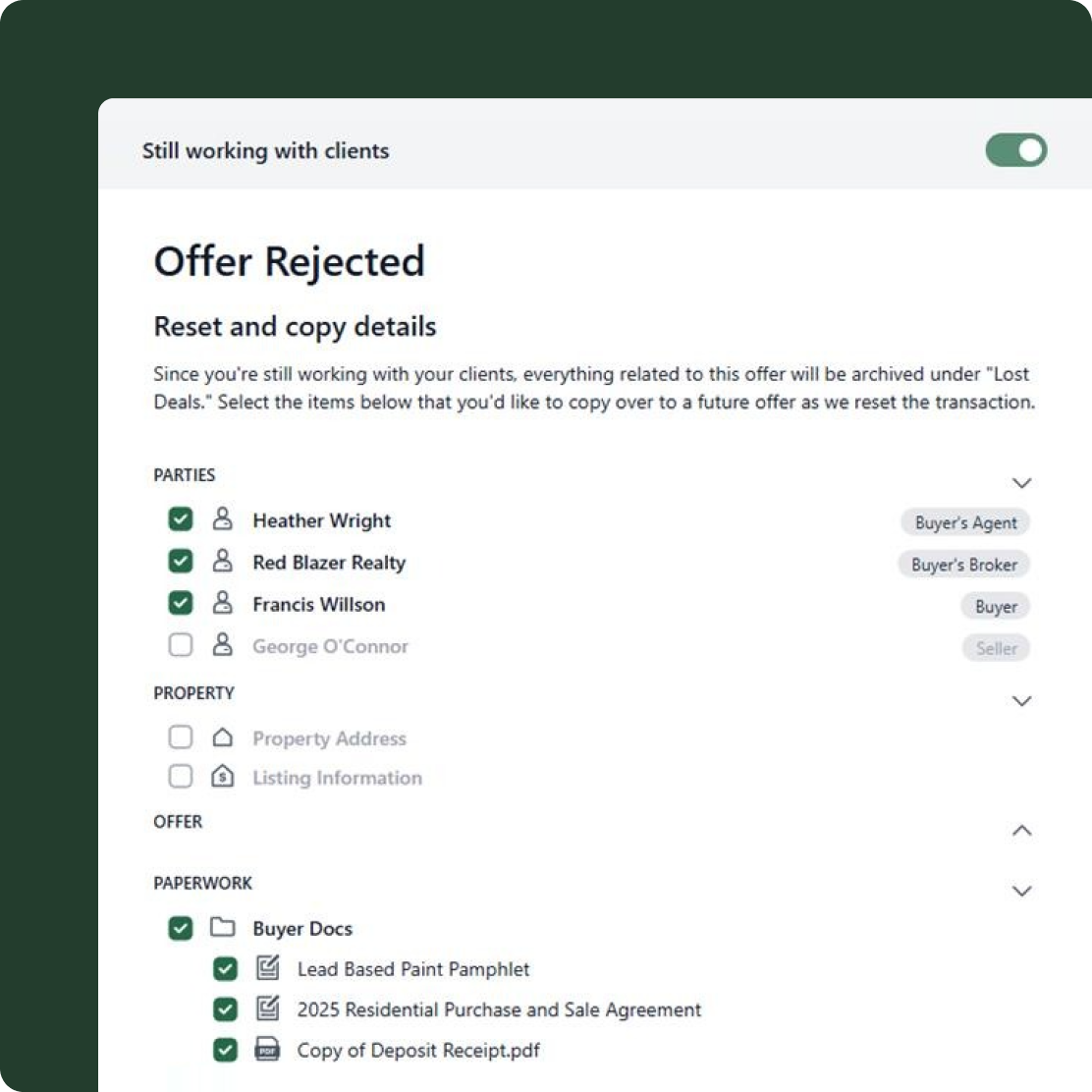
- Create the buyer's contact record in Transact's lost deal workflow to keep every offer, document, and deadline tied to a single record, so if a deal falls apart, you can move forward with the same buyer record instead of rebuilding the transaction from scratch.
- Collect and route the signed buyer representation agreement through Authentisign.
- Set up real-time MLS alerts for target neighborhoods.
Seller's agent checklist
- Conduct a pricing and timeline consultation: pull comps, set realistic expectations on current days-on-market, and confirm the seller's move-out timeline.
- Collect and route the signed listing agreement through Authentisign.
- Create the seller's contact record in Transact, anchoring every disclosure, showing, and future offer to one client file.
- Send sellers the required disclosure forms to complete digitally before photos and showings begin, so nothing holds up the launch.
- Build and apply your listing checklist template in Transact, such as photos, staging, sign install, lockbox, and MLS entry.
- Confirm showing-access logistics with the seller up front.
Phase 2: Preparing for the market
Once a client is under representation, the work shifts to getting ready to move fast — because in a busy market, the agents who can act immediately win the deal. Transact supports this phase by letting you pre-build offer templates, escalation clause language, and listing checklists ahead of time, so when a buyer says "go" or a listing is ready to launch, you're filling in details instead of starting from a blank page.
Buyer's agent checklist
- Build a shortlist of pre-vetted lenders, inspectors, and attorneys so you can move immediately under contract.
- Tour properties with a structured feedback process to help buyers articulate trade-offs quickly.
- Review comparable sales weekly to keep pricing guidance sharp.
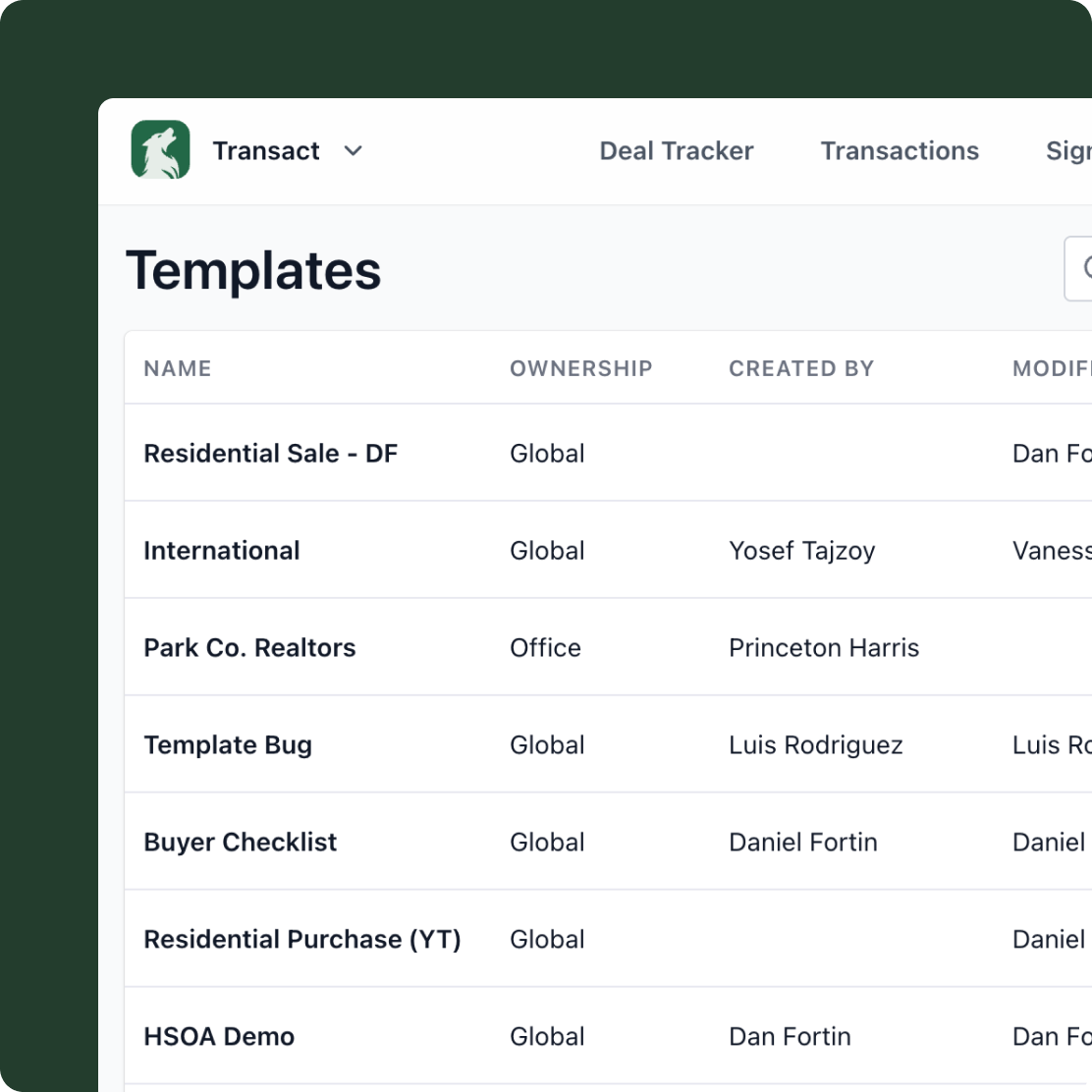
- Pre-load offer templates in Transact, including standard offer language, escalation clause addenda, contingency timelines.
- Draft escalation clause language as a saved template for likely bidding-war scenarios; one less thing to write under pressure.
- Confirm current contingency timelines with your lender contacts.
Seller's agent checklist
- Finalize MLS listing with accurate, complete data—Transact's MLS integration pulls listing details directly in, reducing manual entry errors.
- Schedule and confirm professional photography, staging, and sign installation before the listing goes live.
- Pre-load your seller disclosure package and any required addenda (lead-based paint, HOA, etc.) as templates so they're ready the moment a buyer asks.
- Set a showing-feedback cadence with the seller so they know what buyers are saying week to week.
- Prepare a multiple-offer comparison template in Transact in advance, so if several offers land at once, you're reviewing them on a consistent format instead of building one from scratch under pressure.
Phase 3: Offers and negotiations
Once an offer is written and negotiations begin, buyers and sellers move through parallel workflows. While each side has different responsibilities, both are working toward the same goal: a fully executed purchase agreement and a smooth transition into the under-contract period. This is also where Transact's MLS integration and built-in eSignature do the most work — pulling listing data straight into offer documents and routing signatures back into the transaction record automatically, so nothing gets lost in a side email thread while you're negotiating quickly.
Buyer's agent checklist
- Pull MLS listing data directly into offer documents via Transact's MLS integration.
- Send for eSignature via Authentisign; buyers sign from their phone and the document routes back to the correct transaction folder automatically.
- Every offer is tied to the buyer's contact record in Transact — property, terms, outcome — so nothing gets siloed in a separate email thread.
- If declined, the lost deal workflow in Transact preserves all offer details for reuse on the next property.
Seller's agent checklist
- Log every incoming offer to the listing's contact record in Transact — terms, contingencies, escalation clauses — so you and the seller compare offers side by side.
- Draft and route counteroffers through Authentisign.
- Confirm the seller's decision in writing for every offer accepted, countered, or declined.
- Once a buyer is accepted, every prior offer, counter, and communication stays attached to the same record — so if the deal falls through, your seller isn't starting over.

Phase 4: Under contract — The real estate closing checklist
Once an offer is accepted, every transaction follows the same general timeline. While buyer's and seller's agents have different responsibilities, they're both working toward the same goal: keeping inspections, financing, title work, and closing on schedule.
This is where most deals are won or lost. A missed contingency deadline, delayed appraisal, or overlooked document can quickly derail a transaction. A structured closing checklist, ideally supported by automated milestone tracking, helps keep everyone aligned from acceptance through closing day — flagging deadlines before they're missed instead of relying on anyone's memory.
Day 0–1: Mutual acceptance
The first 24 hours establish the foundation for the rest of the transaction. Getting organized immediately prevents missed deadlines later.
Shared tasks
- Open the transaction and apply the appropriate checklist template—buyer-side or seller-side—so every required task, document, and milestone is mapped out from day one.
- Confirm the earnest money deadline and add it as a tracked milestone.
- Send an introduction email to all parties, including the cooperating agent, lender, title or escrow company, and attorney (where applicable).
Days 1–10: Inspection period
Inspection timelines move quickly during high-volume periods, especially when inspectors are booked weeks in advance.
Buyer's agent checklist
- Schedule the home inspection immediately.
- Arrange any specialty inspections, such as radon, sewer, mold, HVAC, or pool inspections.
- Set an automated reminder before the inspection contingency expires.
- Document the buyer's inspection decision in writing.
- If repairs are negotiated, prepare the addendum, route it for eSignature, and store the fully executed document with the transaction.
Seller's agent checklist
- Coordinate inspection access, especially if the seller is traveling.
- Track the seller's deadline to respond to repair requests.
- Review and respond to repair negotiations.
- Update disclosures if inspection findings require additional disclosures.
Days 5–25: Financing and appraisal
Most financing issues surface during this stage, making proactive communication critical.
Buyer's agent checklist
- Confirm that the lender has received all required buyer documentation.
- Monitor the appraisal schedule and follow up if it's delayed.
- Track the financing contingency deadline with automated reminders.
- If the appraisal comes in low, prepare the necessary addenda and route them for signatures.
Seller's agent checklist
- Coordinate appraisal access and ensure the property is ready.
- Monitor the financing contingency deadline so you know when financing becomes firm.
- Review and respond to appraisal-related negotiations if the value comes in below the contract price.
Throughout the transaction: Title and escrow
Title work often progresses quietly in the background—but unresolved issues can delay closing if they aren't addressed early.
Buyer's agent checklist
- Confirm that the title order has been opened.
- Review the title commitment for exceptions.
- Confirm HOA documents are ordered and received (if applicable), and share an overview of how title insurance and closing services work so your buyer understands what they are paying for. For a plain‑language primer, see the CFPB’s guide to shopping for title insurance and other closing services.
- Explain title insurance and closing services, so buyers understand the process.
Seller's agent checklist
- Request payoff statements for mortgages, liens, and HOA balances as early as possible.
- Review the title commitment for issues that must be resolved before closing.
- Confirm that any seller-required HOA documentation has been delivered on time.
Final week before closing
This is the home stretch of your real estate closing checklist, where small oversights can carry the most risk. With closing approaching, the focus shifts from contingency management to confirming every remaining detail.
Shared tasks
- Confirm the closing date, time, and location with all parties.
- Verify wire instructions directly with the title or escrow company—never rely on emailed instructions.
- Compile the transaction's compliance documents so they're ready for review.
Buyer's agent checklist
- Schedule the final walkthrough 24–48 hours before closing.
- Confirm that the buyer's homeowner's insurance binder is in place.
- Review the Closing Disclosure as soon as it's available.
Seller's agent checklist
- Coordinate move-out timing around the buyer's walkthrough.
- Confirm that agreed-upon repairs and cleaning have been completed.
- Verify payoff amounts and seller proceeds with the closing company.
Closing day
The goal on closing day is simple: confirm every final detail and support your client through the finish line.
Shared tasks
- Complete or confirm the final walkthrough.
- Verify that all parties are ready to close.
- Attend closing or ensure your client has the support they need.
- Mark the transaction as closed so commission processing, compliance records, and production reporting can move forward.

Phase 5: Post-closing
Closing doesn't mark the end of the client relationship. Following up consistently helps generate reviews, referrals, and future business while ensuring transaction records remain complete for compliance purposes. This is where Lone Wolf Relationships picks up where Transact leaves off — the closed deal rolls into your production history automatically and tagging clients as past buyers or sellers keeps them visible in your pipeline long after the closing table.
Buyer's agent checklist
- Send a closing gift or handwritten note within 48 hours.
- Request a Google or Zillow review while the experience is fresh.
- Tag the client as a past buyer in Lone Wolf Relationships for future nurture — the closed transaction records to your production history automatically, so your numbers stay current.
- Use Deal Tracker (available as an add-on within Lone Wolf Relationships) to keep closed buyers visible in your pipeline so referral opportunities and repeat business don't disappear after closing day.
- Note referral sources and thank them.
Seller's agent checklist
- Send a closing gift or handwritten note within 48 hours.
- Request a Google or Zillow review while the experience is fresh.
- Tag the client as a past seller in Lone Wolf Relationships — most sellers become buyers next, so this record matters for the next conversation.
- Use Deal Tracker to keep past sellers visible in your pipeline; a seller who just sold is often your best near-term lead for a move-up purchase or referral.
- Note referral sources and thank them.
What to look for in real estate transaction management software
A checklist is only as effective as the system managing it. The right real estate transaction management software helps agents automate repetitive tasks while keeping every document, signature, deadline, and communication connected throughout the transaction.
| Feature | Why it matters |
|---|---|
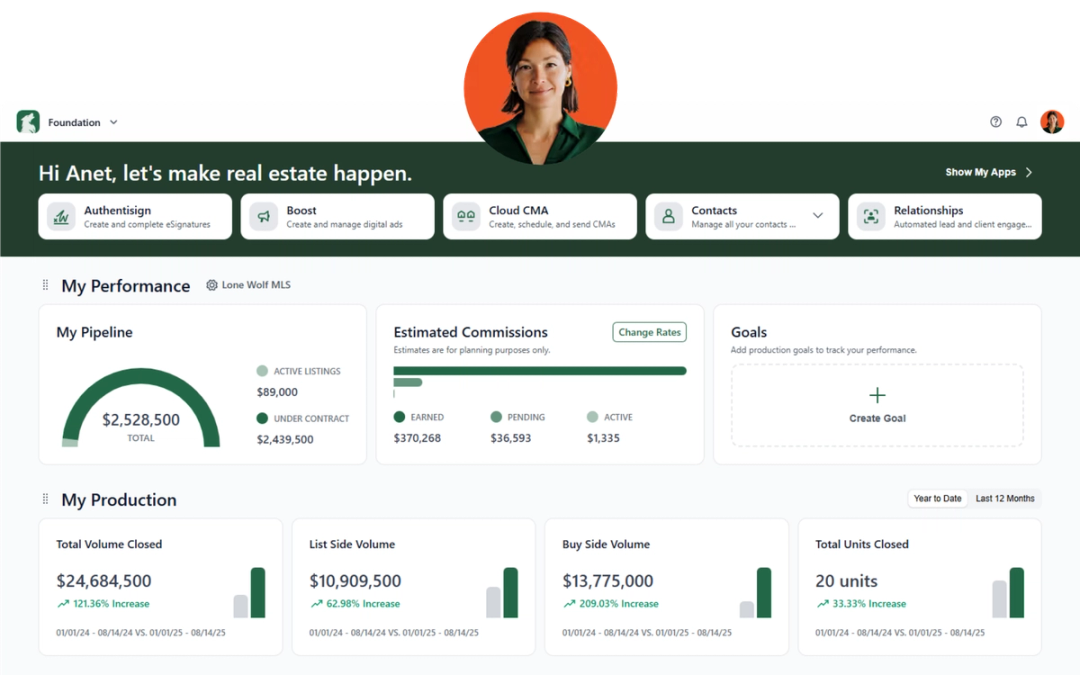
| Centralized dashboard | See all active deals — listings and buyer transactions — without switching apps |
| Automated task checklists | Never miss a contingency or disclosure deadline when managing multiple offers or listings |
| MLS integration | No manual re-entry into offer documents or listing data |
| Built-in eSignature | Buyers and sellers sign from their phone; documents file automatically |
| Contact-driven transactions | Pivot to a new property — or relaunch a listing — without rebuilding the client file |
| Disclosure management | Sellers complete required disclosures digitally, guided and error-checked, before a listing goes live |
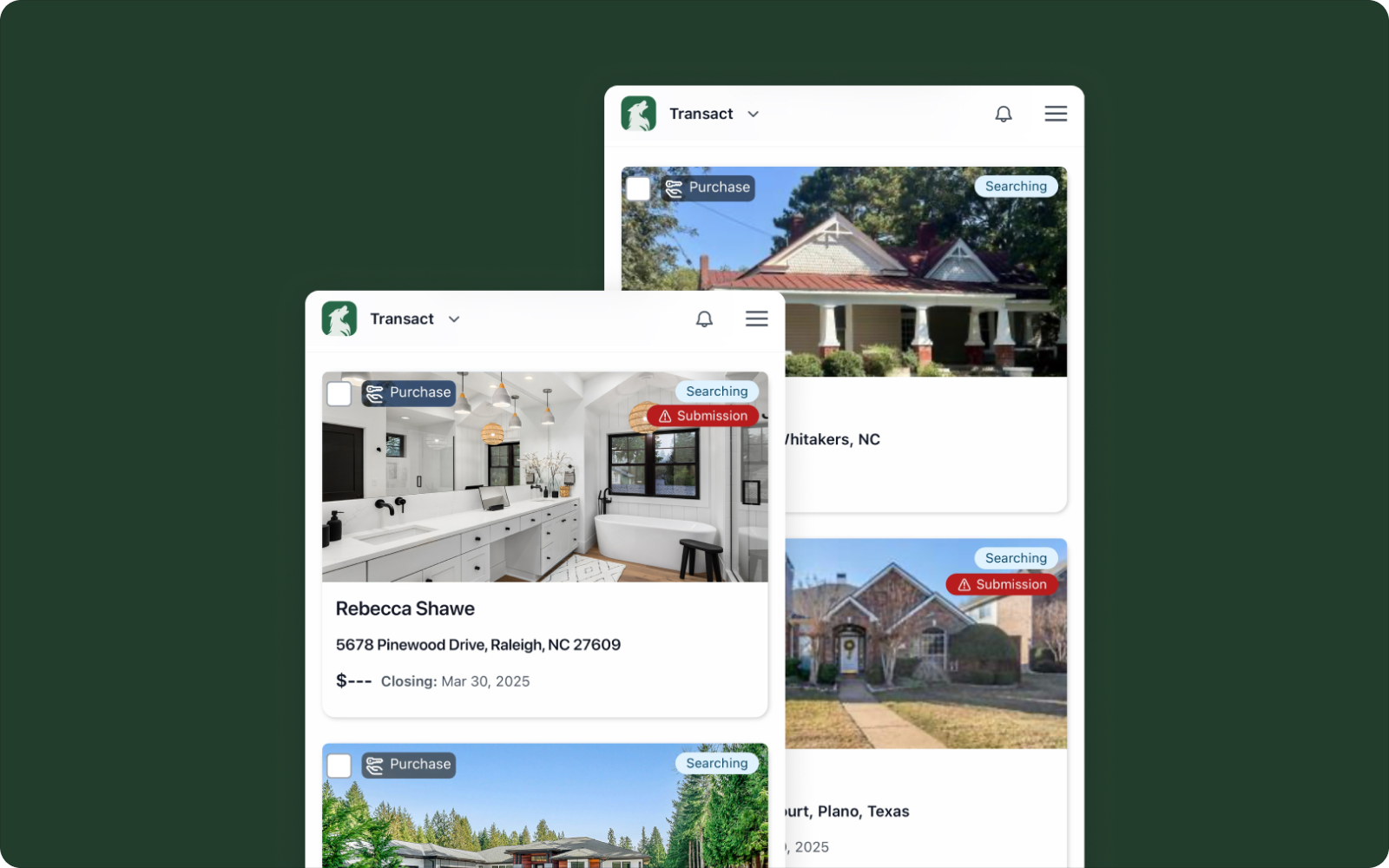
| Mobile-first design | Manage deals from open houses, showings, listing appointments, and the road |
For a deeper comparison of real estate transaction management platforms, including Lone Wolf Transact, Dotloop, SkySlope, and others, read How to choose the best real estate transaction management software in 2026.
Get ready for your busiest season
A busy market rewards agents who prepare before things get hectic. A standardized transaction checklist for real estate agents helps create consistency across every buyer, seller, and transaction, while real estate transaction management software provides the tools to automate tasks, organize documents, and keep every deal moving toward a successful closing.
Whether you're managing two transactions or twenty, having a repeatable system means spending less time chasing paperwork and more time serving your clients.
Ready to see how Lone Wolf Transact can power your workflow?
Learn more about TransactFrequently asked questions.
What is a transaction checklist for real estate agents?
- A step-by-step roadmap of every task, document, and compliance deadline required to move a deal from the initial client consultation through closing day, often referred to on its own as a real estate closing checklist, since it covers the highest-stakes deadlines
Can transaction management software handle multiple buyers and listings at once?
- Yes—that is its primary purpose. Platforms like Lone Wolf Transact use centralized dashboards, automated task templates, and contact-driven records to keep multiple active pipelines organized simultaneously.
What features should I look for in real estate transaction management software?
- Prioritize a centralized pipeline dashboard, automated task templates, deep MLS integration, built-in mobile eSignatures, contact-driven client profiling, and a mobile-first design for on-the-road access.
Is transaction management software worth it for solo agents?
- Yes. Without an administrative team to catch errors, solo agents benefit most from automation. The software acts as a built-in transaction coordinator, managing compliance and dates so you can safely scale your volume.
Other resources
See more eBooks, webinars, and blog articles to help you stay ahead with strategies designed for your success.